Sleep Apnea Treatment

Sleep Apnea is a sleep disorder characterized by pauses in breathing during sleep. Each episode, called an apnea, lasts long enough so that one or more breaths are missed, and such episodes occur repeatedly throughout sleep. In 
Obstructive Sleep Apnea (OSA), breathing is interrupted by a physical block to airflow despite respiratory effort. Rarely are OSA sufferers even aware of their condition and most simply become conditioned to the daytime sleepiness and fatigue associated with significant levels of sleep disturbance.

Spouses are often the person aware of a loved one's snoring.  We have also observed that spouses can accommodate to the snoring bed partner and are not aware of the problem.   

For those who are aware of their sleep apnea condition, the gold standard for treating OSA has long been an oral appliance called the CPAP machine. Although very effective, many people find the CPAP to be very uncomfortable and cumbersome. In fact, it is well known that after one year 67% of CPAP users are no longer using the machine. In many cases, sleep apnea sufferers may benefit from and prefer a more comfortable jaw-aligning oral appliance.  The purpose of this device is to reposition the tongue forward and out of the throat to allow for a clear airway.  Delivering more oxygen to the body allows you to wake up feeling more rested and energetic.

How Do I Determine If I Have a Problem?
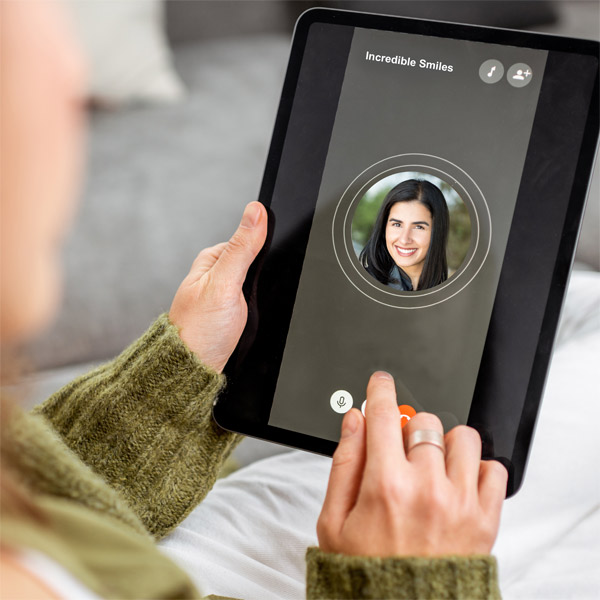
The standard sleep study is done in a sleep lab, a stranger is watching you sleep, and you are hooked up to many leads that often disturb the sleep. The team at Incredible Smiles has a solution.  We offer our guests a method of doing a sleep study in the comfort of their own home.  By taking home a monitor you are able to receive a report on the severity of your OSA and the results are back within 48 hours.  A sleep physician will review your report to make recommendations for treatments such as an oral appliance (made by a dentist) or CPAP.

The Home Sleep Study

The team at Incredible Smiles has tried several home sleep devices and we like the Ares from Watermarkmedical.com.  This device is worn on the forehead.  There are no leads or wires running from the fingers.  This arrangement allows for ease of use especially when bathroom breaks are needed during the night.

What Will The Report Tell Me?
The report will give you the following information:
o  Number of hours spent sleeping
o Number of times you woke up
o The decibel level of your snoring
o  Your body positioning and how that relates to snoring
o  Your oxygen saturation level
o  Your average pulse rate
o The amount of REM vs. non-REM sleep

Schedule a consultation to find out if this comfortable alternative to CPAP is right for you.

What can you the dentist do for me?

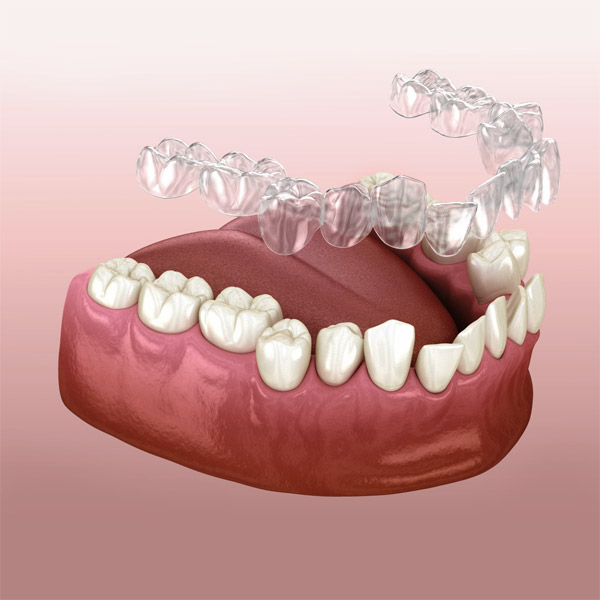
We custom fit a sleep appliance for you.  This device is worn on your upper and lower teeth.  The reason it works is that it pulls the bottom jaw forward.  When the jaw is positioned forward so is the tongue.  The tongue is the largest obstacle to airway flow.  We are simply opening the airway to provide you with the oxygen you need for a restful sleep.

Having sleep apnea puts your health in jeopardy in several ways. When you stop breathing, your body actually wakes itself up—without you consciously knowing it. One huge detrimental effect of this is that you can never get into a deep sleep, so your body never gets the rejuvenating effect of deep sleep. Your body needs two things during the night (three, if you count back massages). It needs REM sleep and NREM sleep.  Both are essential to a thriving functional person.


Your partner's buzz saw-like snoring might make you want to stuff a tennis ball down his throat, but restrain yourself and use your unwanted wakefulness to see if sleep apnea may indeed be their problem. The most critical thing to look for is a pause in breathing for more than 10 seconds. But be careful: breathing can be an illusion. When Mr. Lawn Mower Mouth suddenly falls silent, you may think he is breathing but in fact the breathing and oxygen flow may have stopped!

If you don't have a bedmate who can personally witness your breathing breaks during the night, you can still gauge your risk of sleep apnea. These are all big risk factors:

1. Being overweight

2. Being excessively sleepy during the day. For example, if you can fall asleep anywhere during the day (and you do not work or play all night long)

3. Having a neck that's over 17 inches in circumference. 

Sleep apnea is a serious sleep disorder that occurs when a person's breathing is interrupted during sleep. People with untreated sleep apnea stop breathing repeatedly during their sleep, sometimes hundreds of times during the night. There are two types of sleep apnea: obstructive and central. Obstructive sleep apnea is the more common of the two. Obstructive sleep apnea occurs as repetitive episodes of complete or partial upper airway blockage during sleep.  druing the apnea episode, the diaphragm and chest muscles work harder as teh pressure increases to open the airway.  Breathing usually resumes wiht a loud gasp or body jerk.  These episodes can interfere with sound sleep, reduce the flow of oxygen to vital organs, and cause heart rhythm irregularities.  

In central sleep apnea, the airway is not blocked butthe brain falis to signal the muscles to breathe due to instability in teh respoiratory control center.  Central apnea is named as such because it is related to the function of the central nervous system.

People who suffer from sleep apnea can choose a number of treatment options, although none are perfect. The most popular being a C-PAP mask (or continuous positive airway pressure mask) that's worn when the person sleeps. The mask—which looks like a traditional oxygen mask that's hooked up to a machine with tubes—gauges levels of the airway resistance and pushes air past the swollen tissue so oxygen is delivered.  A Mandibular Repositioning Device (MRD) is made by a trained dentist and positions the jaw forward.  It has no bells and whistles like th CPAP and it is more highly tolerated.  The compliance or continued use of the CPAP after one year is only 33%.

There are a number of ways you can help your baby become a better sleeper. These include: Work on shifting your baby's sleep cycle more toward nighttime by 2-3 months of age.Newborns frequently have their days and nights reversed and often the awake/sleep cycle is governed by the need to feed. When there is a need to feed during the night, keep lights dim and reserve stimulating interaction for the daytime.

Obstructive sleep apnea (OSA) is very common. Research has shown that about one in every 5 adults has enough sleep apnea to be considered abnormal. This makes OSA about twice as common as asthma. Most individuals with OSA have only mild disease when defined by the frequency of the abnormal breathing events during sleep, and most of them don't have daytime symptoms. About one in 20 adults has the About one in 20 adults has the Obstructive Sleep Apnea Syndrome, which is OSA associated with excessive daytime sleepiness. That is a lot of people with OSA, about 23 million in the United States with at least mild disease, and 16 million with moderate to severe disease. So it is very likely you know someone with OSA, although they may not tell you. If you travel by plane, say on a Boeing 747 with 451 uncomfortable fellow passengers, you have a one in 25 chance of sitting next to one who has significant OSA. If that person is a male and is fat and a snorer, the chances that he has OSA are even higher. OSA is distributed in the population unequally. It is more common in males (24%) than females (9%), and in those who are obese. One out of every 10 habitual snorers has symptomatic OSA. Because OSA is strongly linked to obesity and age, and on average our population is growing older and fatter, OSA is becoming more common all the time.

You will probably see someone with OSA today. It might be your bed-partner.


For some carefully selected people the answer is yes, surgery is a good therapy option for their obstructive sleep apnea (OSA). However the majority of patients with OSA are best treated medically. Placing a breathing tube in the windpipe (tracheostomy) was the first treatment described for OSA. It was always successful, but was poorly accepted and is seldom used today. The removal of pharyngeal tissue to open the airway may be indicated for a small percentage of people.  As a dental office we always look in the throat to see if this could be a contributing factor toward soemone's OSA.  If these tissues are present we will discuss the possible outcomes of surgery. 


For the vast majority of people with obstructive sleep apnea (OSA) their condition is a chronic disease. If you have OSA it will last your lifetime. It can be successfully managed, but it will not be cured. In that way OSA is like other chronic diseases such as diabetes or high blood pressure. In highly selected patients surgical cures of OSA have been reported. Management of OSA with changes in lifestyle and the addition of a medical device have proven to be very effective.  Loss of weight and neck size is very important as a first lifestyle change.  Use of a medical device like a MRD (mandibular repositioning device) with a dentist or with  CPAP from a sleep physician will likely help.